



Life is much better when you are smiling!
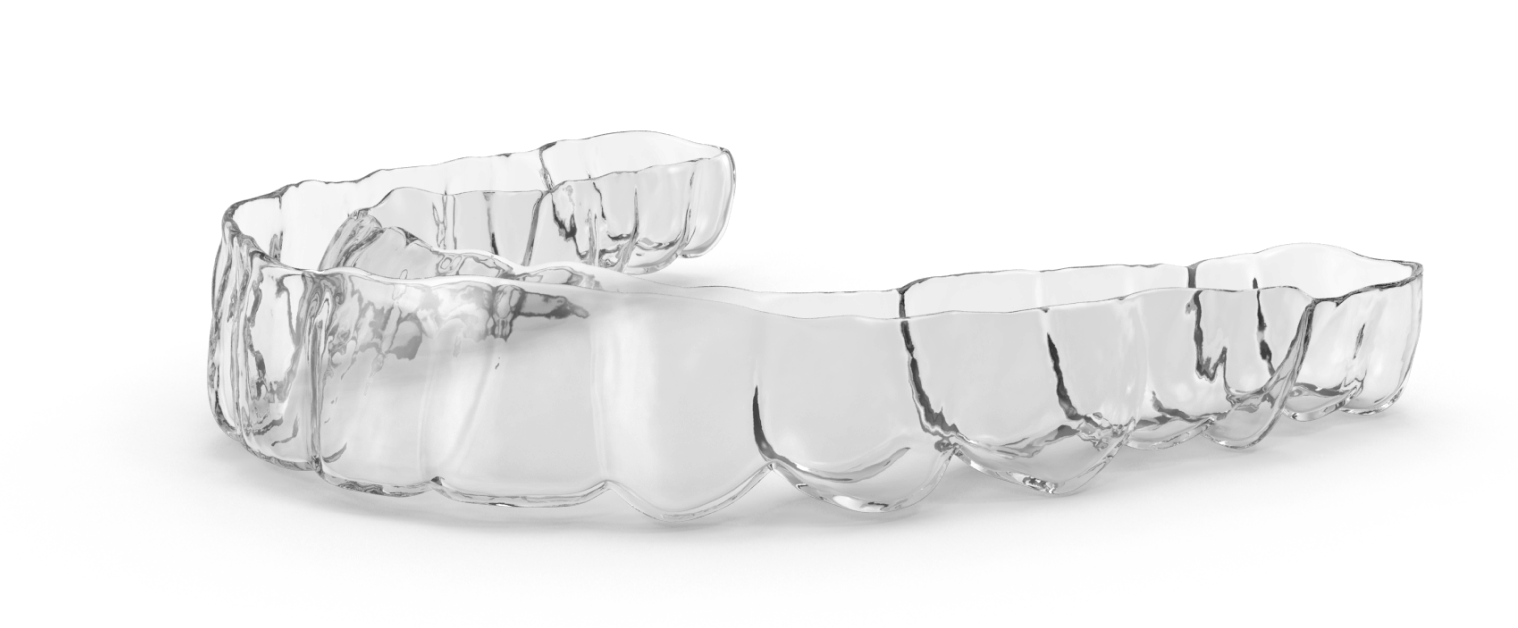
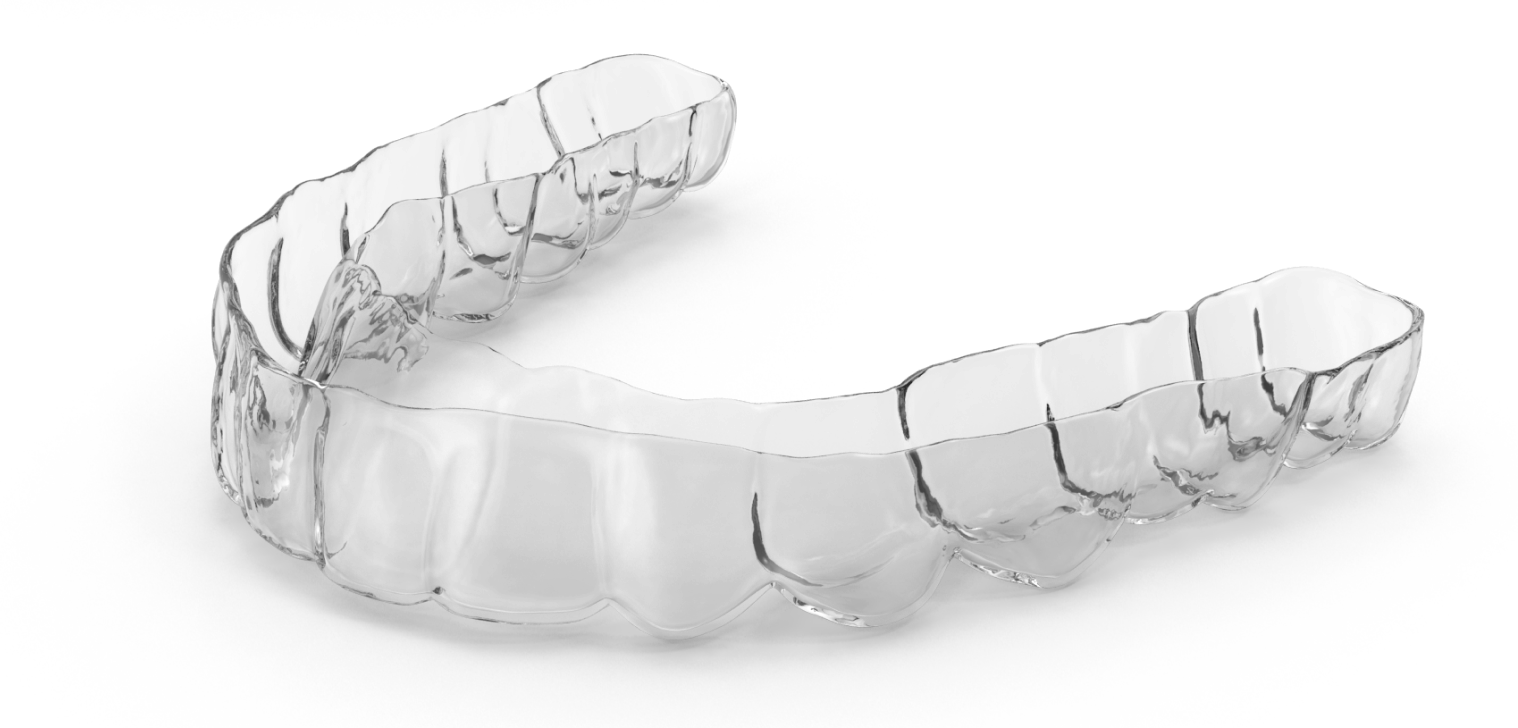
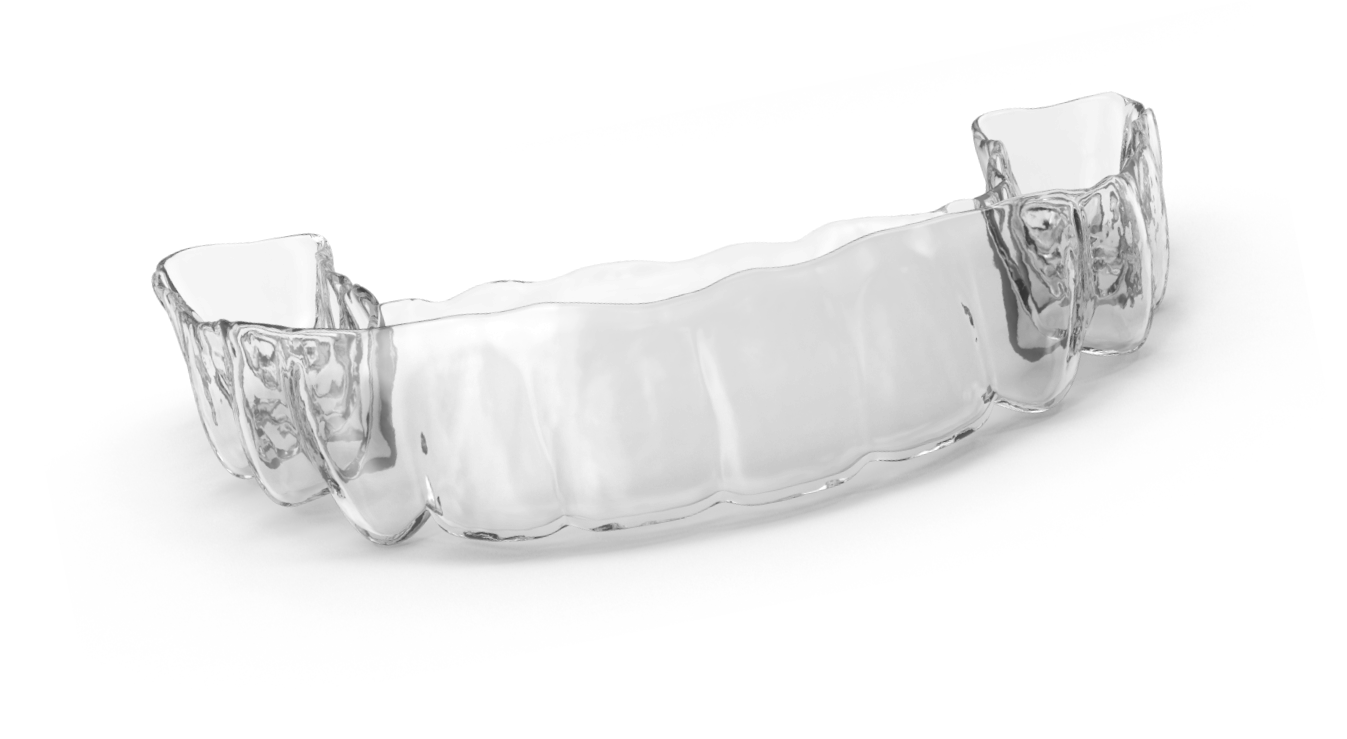
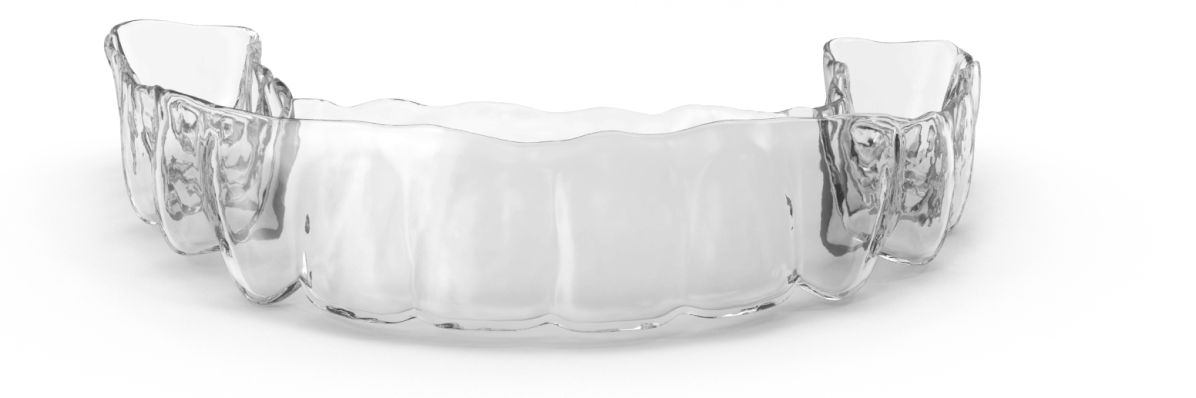
Aligners are the lightest transparent mouthpieces for bite correction. They are made of a durable polymer that is invisible to others and use the latest technology.
What are aligners?
Modern orthodontics uses them to correct occlusion in adults and children. Before the treatment procedure, the specialist creates a virtual model of the patient's teeth with visualization of each stage of movement. Individual aligners allow the doctor to very accurately calculate the direction of their pressure, so the correction of the patient's bite is fast and effective. Treatment using aligners only implies compliance with the doctor's prescriptions, wearing mouthpieces for at least 22 hours a day and timely replacement of the pair with a new one.
Why choose
aligners?
aligners?

Aligners are almost invisible to others
Adults and adolescents often refuse treatment due to embarrassment, but transparent mouthpieces completely solve this problem. Ready-made aligners are transparent and exactly follow the shape of your teeth, so you can smile without embarrassment.

No inconvenience
The smooth surface of the aligners does not irritate the oral mucosa, minimizing pain for the patient.

No limitations
The process of brushing your teeth is the same as before, and there are no restrictions on diet or sports. Aligners are easy to put on and off and easy to maintain.

No contraindications
Do not cause allergies or irritations. Their flexible and durable material allows treating even the most difficult cases.

How is the aligner treatment performed?


1. Patient examination
2. Treatment planning
The doctor collects diagnostic data through a complete examination of the oral cavity and identifies possible contraindications and diseases of the oral cavity that must be eliminated before starting treatment and take X-rays. At the initial examination, the doctor concludes whether the aligners are able to solve your problem.
The doctor conducts a photo protocol - a series of photos of the teeth, face and smile from different angles, 3D scanning, X-ray (3D or computed tomography) to record the current state of the teeth and plan treatment. Based on the diagnostic data, the specialist creates a 3D visualization model where the patient can see how the teeth will move at each stage of treatment.

3. Main stage of treatment
After drawing up a treatment plan, the doctor meets with the patient and discusses the course of the patient’s treatment. As soon as the patient agrees to undergo treatment, the laboratory creates a set of individual aligners, which are then delivered to the clinic. The doctor installs the aligners and your treatment begins. Aligners should be worn at all times, taking them off only during brushing and eating. Every 2 weeks, you replace your aligners with new ones according to your treatment plan. It is necessary to visit a doctor once every 1.5-2 months to monitor the result.

4. Retention stage
When all the defects in the dentition are corrected, the patient will need to wear retainers to stabilize the new position of the teeth.
How to use aligners?
Put on the aligner
Put the mouthpiece on the front teeth first and then push on the back teeth until you hear a click.
Adaptation
In case of discomfort, make a few chewing movements with a special silicone roller – it induces the blood inflow.
Treatment
Wear your aligners daily for at least 20-22 hours. When eating and brushing your teeth, simply take them off and put them back on afterwards. After 2 weeks, put on the next aligner – during this period, your aligner has moved your teeth by a fraction of a millimeter and the next one will continue the correction process.
Bite changes
Enjoy the first results of your treatment.


Treatment duration
The duration of treatment depends on the complexity of the case, which is determined by the results of the diagnosis and calculated when drawing up a treatment plan.
2
~2 months
Minimal tooth turns/movements, relapses, as well as tooth correction after treatment with braces are carried out.
4
~4 months
Correction of minor defects in the oral cavity or relapses after orthodontic treatment.
6
6-8 months
Correction of relapses, diastema, rotation, tremas closure and slight teeth crowding correction.
10
After 10 months
Includes more than 20 aligners. Allows eliminating pronounced crowding and wide gaps, closing diastema and treating other anomalies.
Where to start?

1. Diagnostics
Since aligners are an individual product, diagnostics are indispensable. To do this, the doctor will scan the dentition and take photos and pictures of the teeth.
Based on the diagnostic data, a virtual treatment plan will be simulated on the computer, as well as the duration of treatment, the number of aligners and the exact cost of your treatment course will be calculated.
Based on the diagnostic data, a virtual treatment plan will be simulated on the computer, as well as the duration of treatment, the number of aligners and the exact cost of your treatment course will be calculated.

2. Viewing the final result of the treatment
Your doctor will invite you to an appointment to view a virtual plan. You will see how your teeth will move and what the result will be at the end of the aligner treatment before the treatment itself begins.

3. Fixation of aligners
Aligners are sent to the clinic, where the doctor will fix them on your teeth and tell you about the rules and recommendations for using aligners. Your treatment begins!

How quickly can I install the aligners?
First appointment
30 min - 60 €
The doctor conducts an examination and concludes whether the aligners are able to solve your problem. The doctor also evaluates the condition of the oral cavity and prescribes treatment according to indications before starting orthodontic treatment.
Diagnostic visit
45 min
Intraoral scanning, photographing of teeth and face, and 3D X-ray (computed tomography) are performed. All this is necessary to draw up a treatment plan and create a 3D visualization model.
Creation of a treatment plan and a 3D visualization model
14 - 21 days - 300 €
After the diagnostic visit, a treatment plan and a 3D visualization model of the teeth movement are drawn up within two to three weeks. At the third appointment with the doctor, you will see the process of teeth moving from the initial position to the desired one and find out the duration and cost of treatment.
Conclusion of the contract
15 min
After calculating the cost and drawing up a treatment plan, you enter into a contract and make a one-time payment or a down payment for treatment in the amount of 60% of the total cost of treatment and pay the remaining amount on the day of installation.
Receipt and installation of aligners
at least 3 weeks
Within 3 weeks, the laboratory makes a set of individual aligners and delivers them to the doctor in the clinic. The day the aligners will be installed depends on the doctor's availability.
Useful information for patients
Duration of treatment
The duration of treatment is individual. If all the doctor's recommendations are followed, the treatment will be completed within a predetermined period.

Virtual 3D model
You'll know what your smile will look like before your treatment begins. The doctor will simulate a virtual plan for aligning teeth with aligners, according to which future individual aligners will be made by the laboratory.

Meals
There are no dietary restrictions during bite correction with aligners, as the aligners can be removed during meals. You can also do any sports and lead an active lifestyle.

Care
No oral hygiene hassles! When aligning your teeth with aligners, you may brush your teeth with a regular brush. Taking care of the mouthpieces is also very easy – just rinse them with a cool soapy solution or a special liquid and clean them with a soft brush on the inside.

Please smile, it fits you!
Frequently asked questions
They are suitable for absolutely all athletes, even those who are engaged in martial arts. They are made of a durable polymer material that does not deform, does not break under optimal loads and, more importantly, does not damage the enamel of the patient's teeth. This is how they differ from braces.
The technology of bite correction using transparent aligners is suitable for children from 6 years old. Different systems have been developed for children, adolescents and adults, which take into account the peculiarities of jaw development in a specific age range.
The doctor creates a virtual treatment model with a detailed visualization of the movement of each tooth. The doctor can very accurately calculate the load necessary for the gradual alignment of the bite. Each pair of aligners is created using a 3D plan and moves the teeth by means of point pressure.
You need to see your physician. In some cases, it is possible to skip a step and you will simply put on the next mouthpiece. In other cases, the laboratory will promptly produce a new pair of aligners and your teeth alignment will be continued.
In the case of any orthodontic treatment, it is necessary to make the obtained result permanent. The duration of the retention period, as well as the most suitable device for the retention period will be selected by your attending physician. It can be a removable retainer or a mouthpiece, a fixed retainer or a metal wire, or a combination of the two.
As for the need to extract eighth teeth or “wisdom teeth” - the indications for treatment with aligners are the same as for treatment with braces. Usually, the extraction of these teeth is necessary in most cases. Unfortunately, a problem for the majority of the modern population is that over time, due to eighths, crowding of the front teeth occurs, i.e. when growing out, the back teeth shift the neighboring ones. But this is very individual. Only a doctor can answer unequivocally in your case after an examination.
Results
Advantages of aligners
In general, there are more than 50 advantages of aligners over braces! Simply compare aligners with braces. The choice is obvious!
Aligners
Braces
Appearance
Transparent mouthpieces for temporary wear
Temporary teeth sticker + wire
Colors
Transparent
Most diverse
Material
Polymer
Metal/Polymer/Ceramic
Transparency


Possible metal allergies
Suitable for children under 16
Aligners
Braces
3D visualization: software allows us to create a three-dimensional model of the dentoalveolar system
Results and course of treatment can be discussed with the doctor
Patient can participate in treatment
Aligners
Braces
Time to manufacture
7 to 21 days
1-2 days, standard
Installation time
45 minutes to 2 hours for both jaws
3-6 hours
Need to take impressions before installation
Intraoral scan + impressions (optional)
Necessary anesthesia
Aligners
Braces
Treatment speed
In some cases, faster than braces
In most cases, the same as the treatment speed with aligners
Therapeutic effect (bite correction)
How is the effect achieved?
Simultaneous rotation and movement in the desired direction due to the tight grip of each tooth
Sequential rotation, horizontal/vertical movement
Actual teeth alignment
Risk of tooth decay
In case of non-compliance with hygiene - yes
In case of non-compliance with hygiene - yes
Whitening effect
only before or after treatment
only before or after treatment
Possible change of the teeth appearance
Rehabilitation period (after removal)
Retainers - MANDATORY PROCEDURE
Retainers - MANDATORY PROCEDURE
Treatment reversibility
Partially reversible
Partially reversible
Possibility of remineralizing therapy and tooth enamel strengthening
Aligners
Braces
Extraction of wisdom teeth or other teeth
If necessary
If necessary
Removal of part of the tooth enamel
Tooth separation before treatment
If necessary
If necessary
Risk of damaging existing teeth
Yes (enamel), in case of poor hygiene
Possible injuries to the oral mucosa
Dental treatment while wearing
Possible
Possible, but with difficulties (removing the wire, difficulty in isolating the teeth due to braces)
Book an appointment
Cookie policy
All Rights Reserved by elaineri.lv
Book an appointment
Please fill the form and we will contact you shortly.
By submitting form you agree with our Privacy Policy